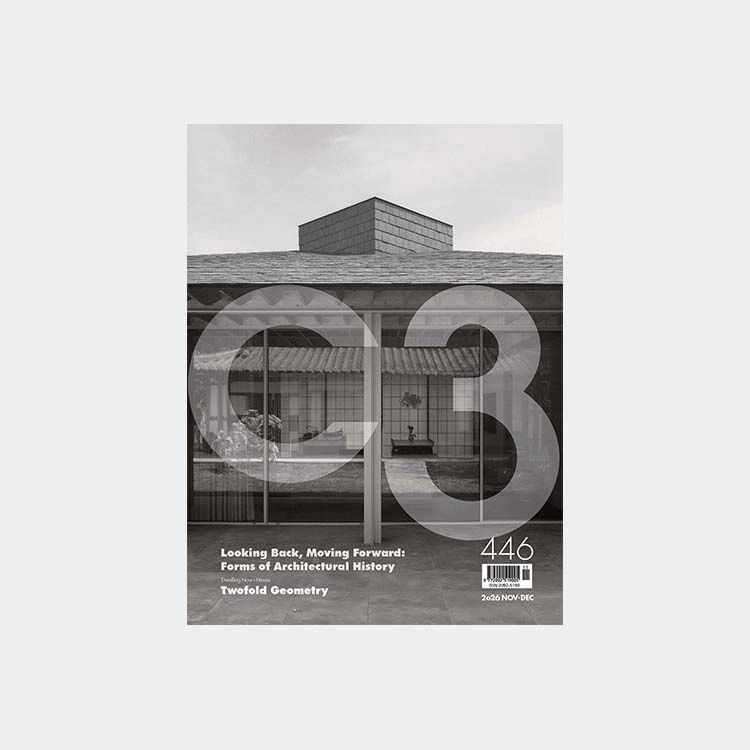
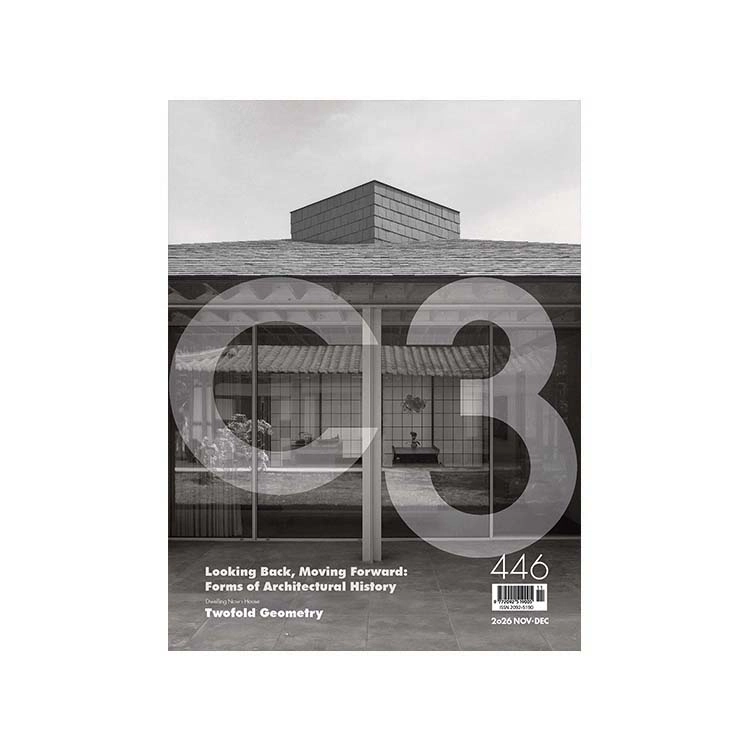
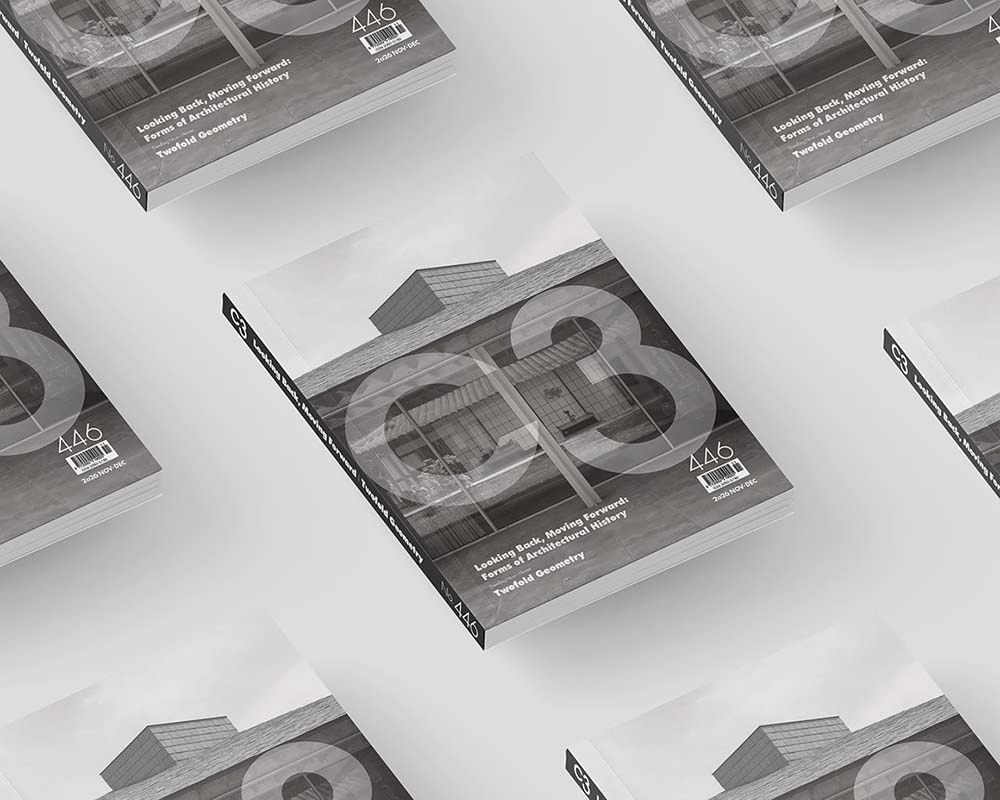
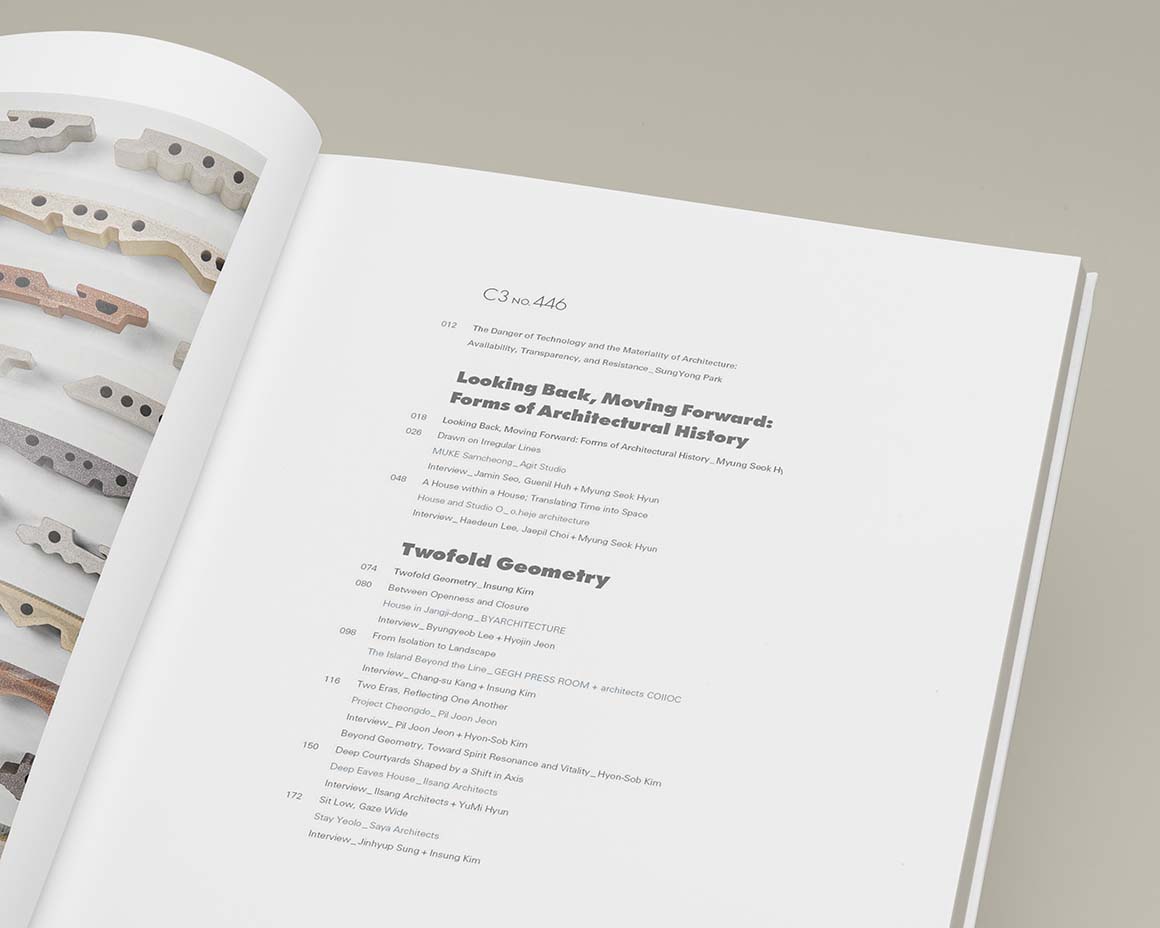
C3 no.446 (2026 Nov/Dec)
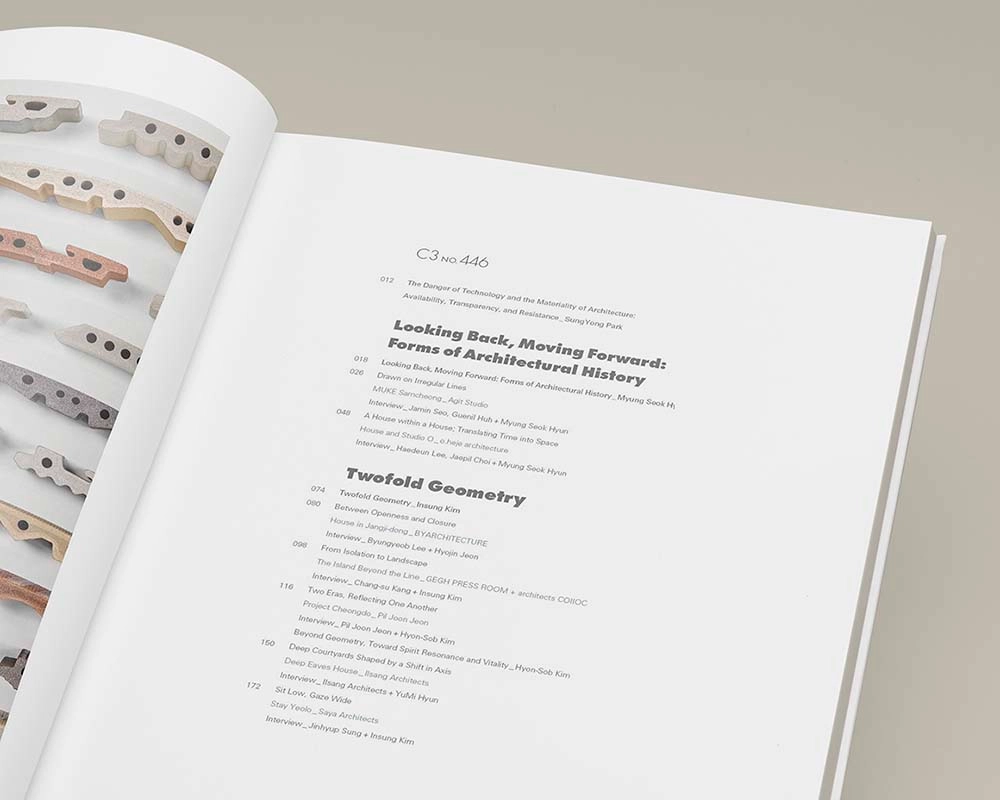
The Danger of Technology and the Materiality of Architecture: Availability, Transparency, and Resistance _ SungYong Park
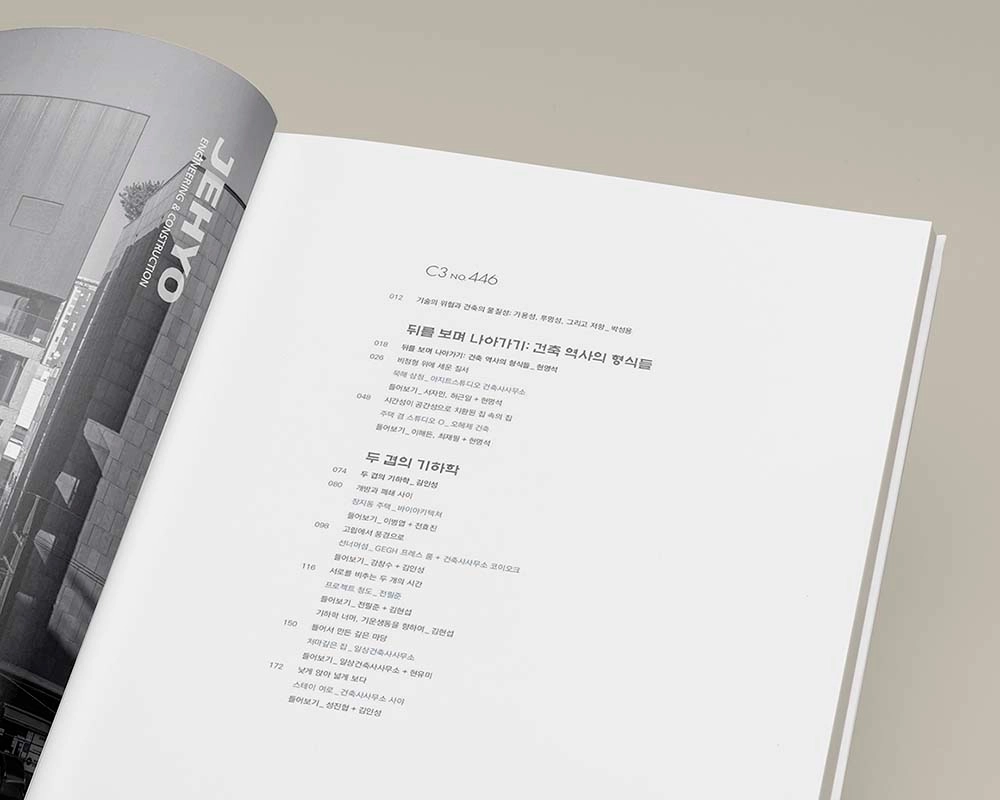
Looking Back, Moving Forward: Forms of Architectural History
Looking Back, Moving Forward: Forms of Architectural History _ Myung Seok Hyun
Drawn on Irregular Lines
- MUKE Samcheong _ Agit Studio
- Interview _ Jamin Seo, Guenil Huh + Myung Seok Hyun
A House within a House; Translating Time into Space
- House and Studio O _ o.heje architecture
- Interview _ Haedeun Lee, Jaepil Choi + Myung Seok Hyun
Twofold Geometry
Twofold Geometry _ Insung Kim
Between Openness and Closure
- House in Jangji-dong _ BYARCHITECTURE
- Interview _ Byungyeob Lee + Hyojin Jeon
From Isolation to Landscape
- The Island Beyond the Line _ GEGH PRESS ROOM + architects COIIOC
- Interview _ Chang-su Kang + Insung Kim
Two Eras, Reflecting One Another
- Project Cheongdo _ Pil Joon Jeon
- Interview _ Pil Joon Jeon + Hyon-Sob Kim
- Beyond Geometry, Toward Spirit Resonance and Vitality _ Hyon-Sob Kim
Deep Courtyards Shaped by a Shift in Axis
- Deep Eaves House _ Ilsang Architects
- Interview _ Ilsang Architects + YuMi Hyun
Sit Low, Gaze Wide
- Stay Yeolo _ Saya Architects
- Interview _ Jinhyup Sung + Insung Kim
Place of origin 대한민국
0.36 Reward points to be earned to be earned
/Region
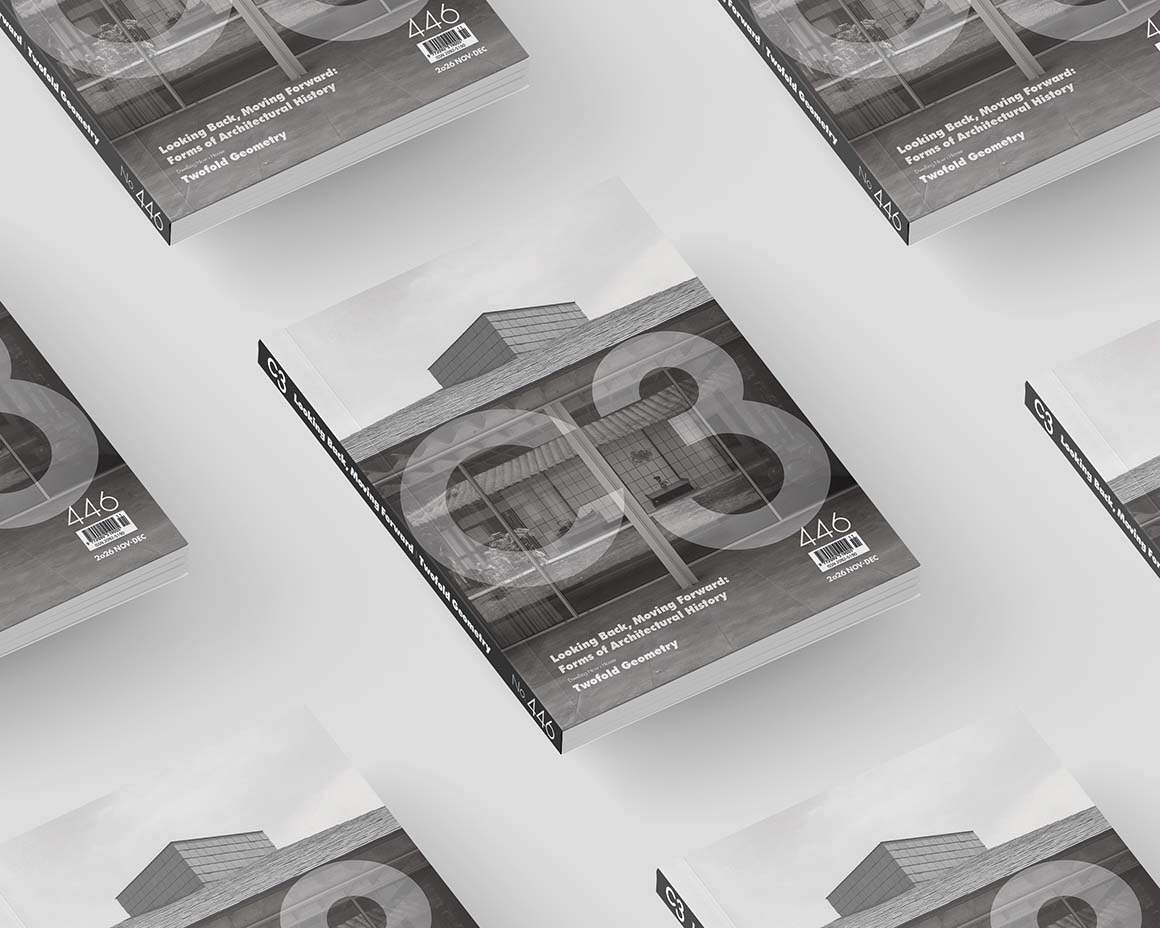
C3 is a premium architecture magazine internationally recognized for its depth of critical insight and visual excellence. As the only Korean architecture publication widely read in global cities such as New York, London, Paris, and Tokyo, C3 documents contemporary architecture through a sharp and discerning lens.
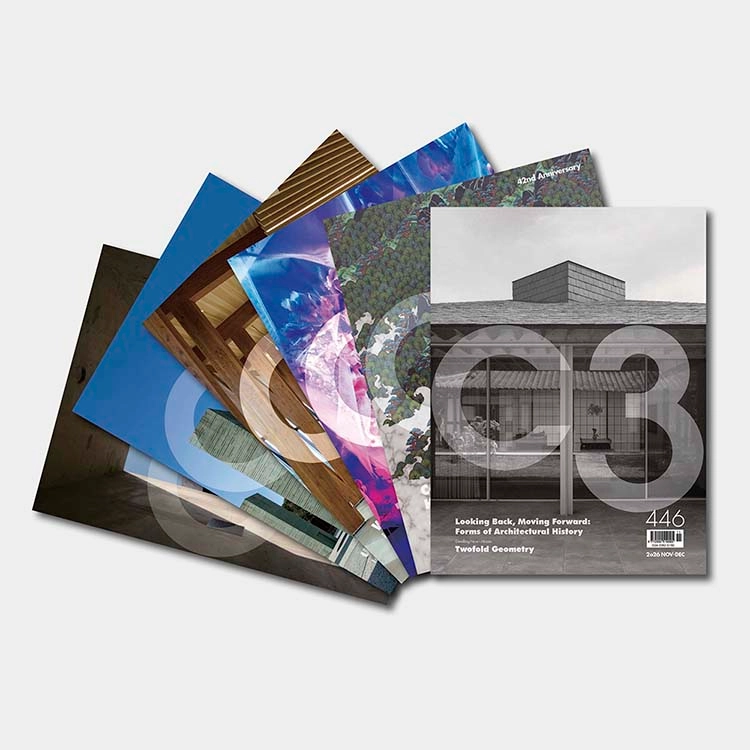
C3 no.446 (2026-Nov/Dec)
This issue of C3 explores how architecture engages with the past and creates new spaces through the coexistence of different orders. It considers architectural history not as a collection of fixed forms but as a resource for contemporary creation, while examining how subtle shifts and differences within simple geometric orders give rise to distinct architectural experiences.
Looking Back, Moving Forward: Forms of Architectural History presents two projects that reinterpret the forms and layers of time accumulated in existing architecture. Through Myung Seok Hyun's critical essay, the section examines how history becomes a generative force in contemporary architectural practice.
Twofold Geometry explores the dual geometric orders found in five houses. It examines how two independent systems meet and diverge without subsuming one another, generating countless differences through their relationships. Moving beyond the novelty of form to consider the intensity of being, the section explores new possibilities for contemporary small-scale architecture.
Looking Back, Moving Forward: Forms of Architectural History
How should architecture engage with the past? In Looking Back, Moving Forward: Forms of Architectural History, Myung Seok Hyun approaches history not merely as something to be preserved or reproduced, but as a formal resource for creating contemporary architecture.
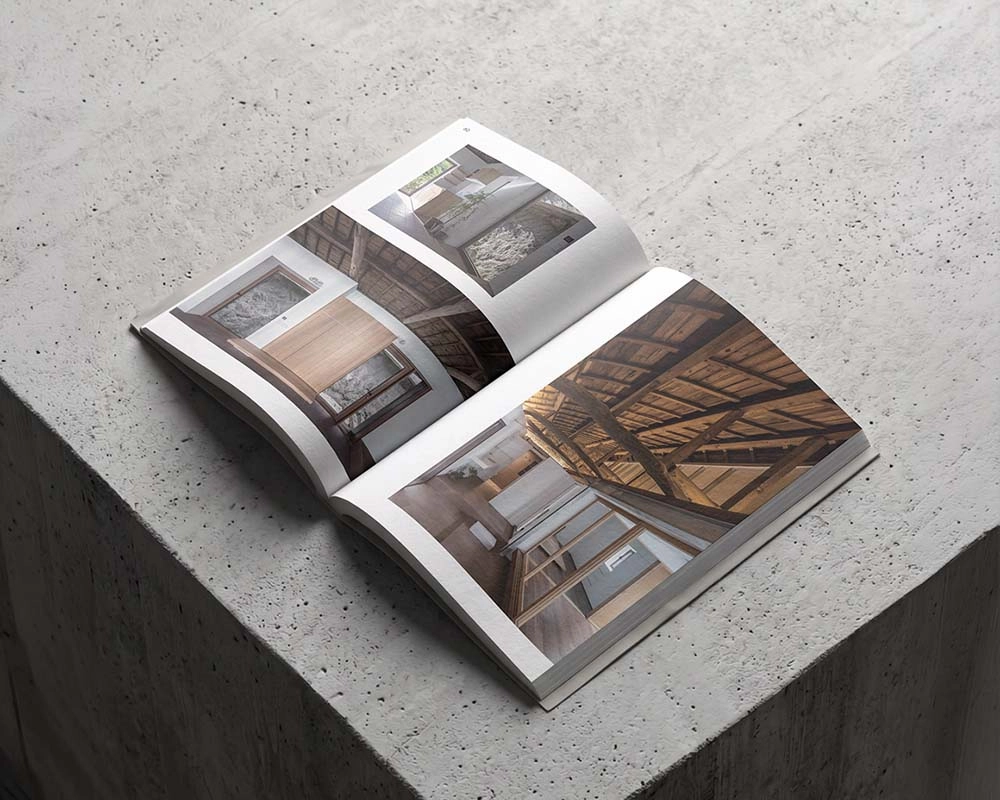
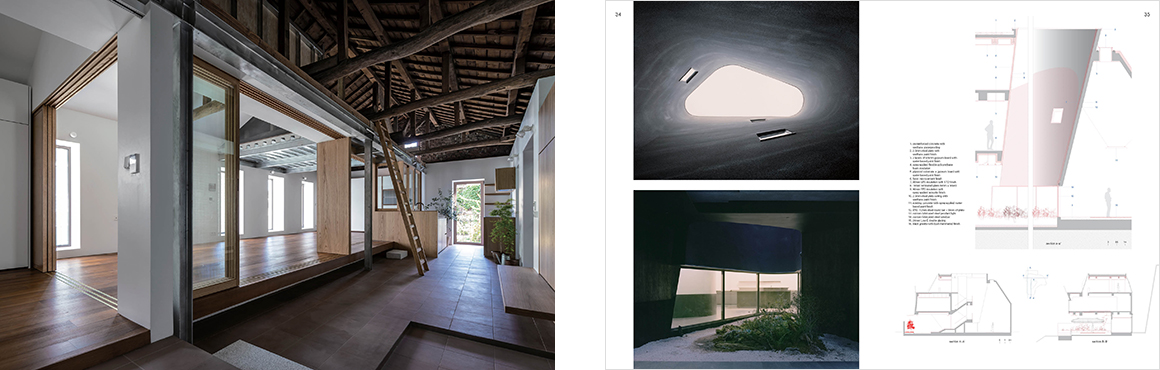
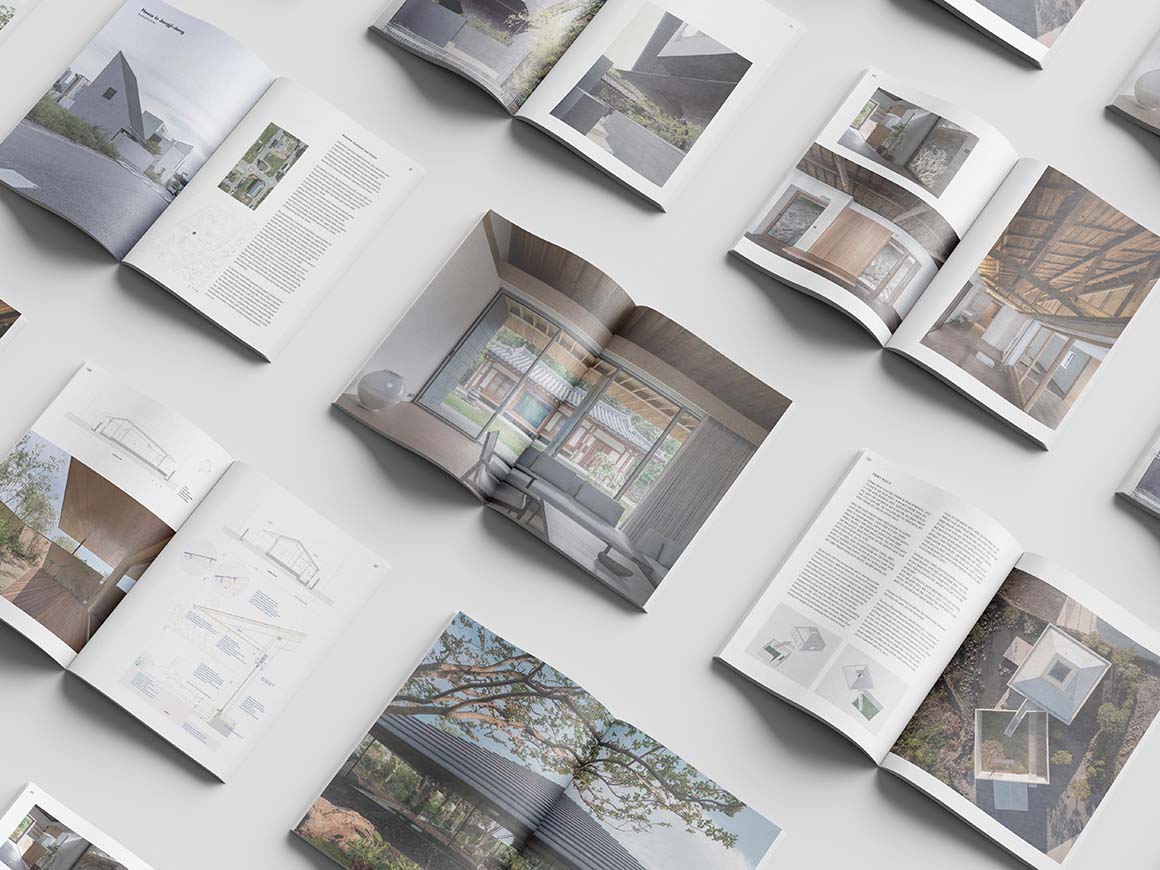
MUKE Samcheong by Agit Studio establishes a new spatial order upon the irregular geometry of an existing building, while House and Studio O by o.heje architecture brings together traces of the old structure and new interventions, accommodating different layers of time within a single space. The two projects reveal how forms inherited from the past can be transformed and acquire new meanings in contemporary architecture.
Twofold Geometry
Does simple geometry necessarily produce simple space? In Twofold Geometry, Insung Kim examines the concise forms found in recent Korean small-scale houses, identifying two independent geometric orders whose coexistence and subtle misalignments generate spatial differences. His reading considers geometry not as a complete and fixed order, but as a generative principle through which new relationships and differences emerge.
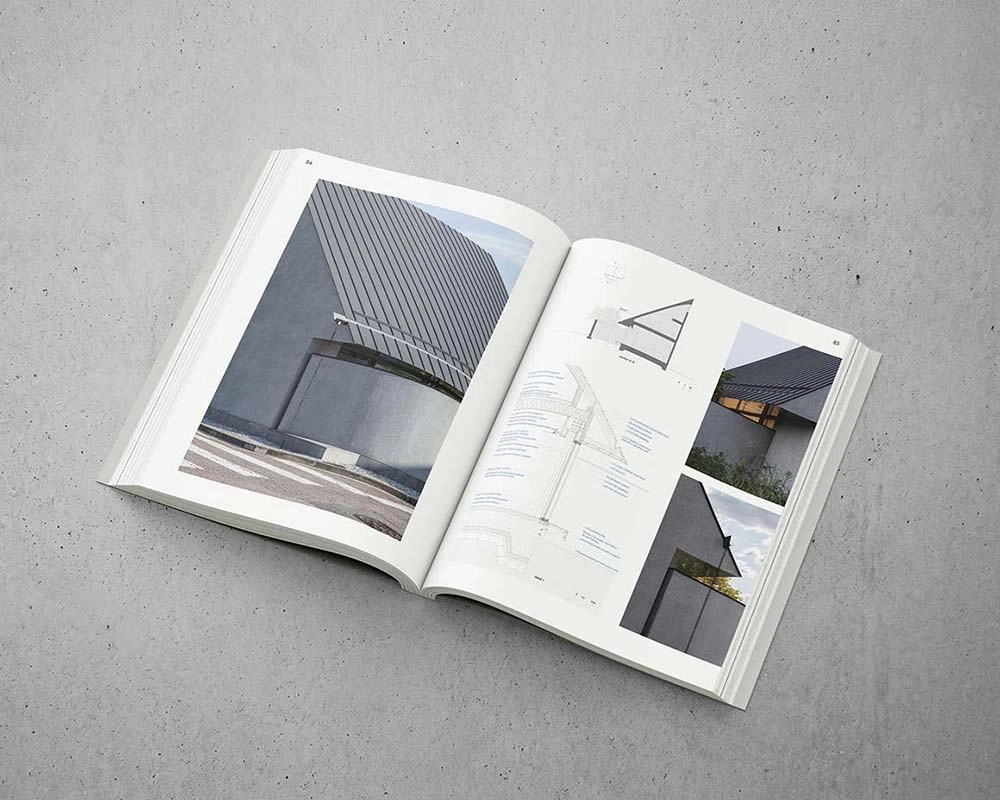
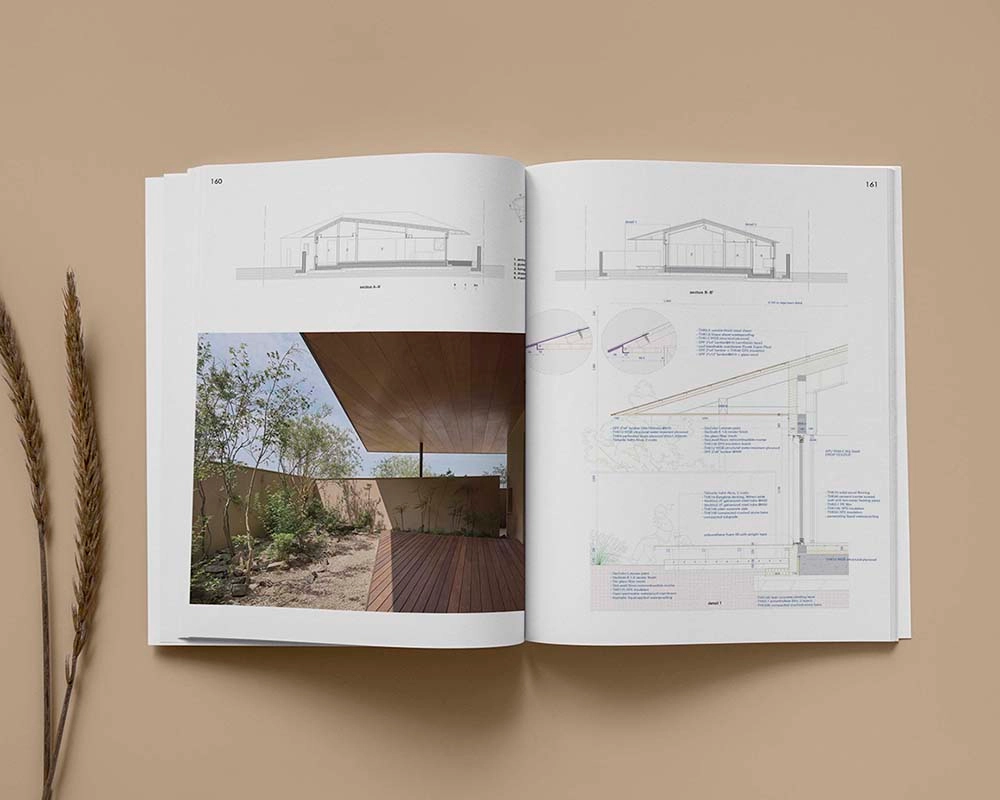
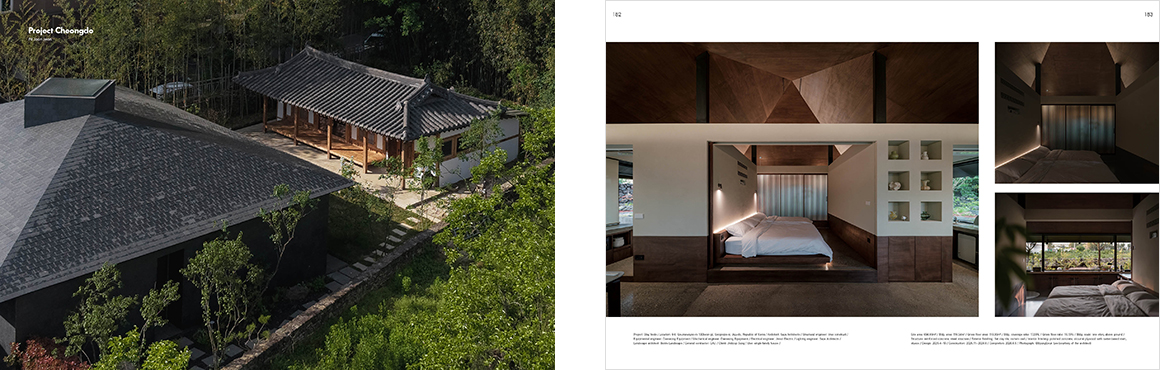
House in Jangji-dong by BYARCHITECTURE juxtaposes a flat lower level with a pointed upper volume, while Stay Yeolo by Saya Architects establishes a relationship between a space embedded in the ground and a small room floating above it. Deep Eaves House by Ilsang Architects creates possibilities for everyday life between an outer order and a shifted interior. The Island Beyond the Line by GEGH PRESS ROOM + architects COIIOC brings together two adjoining squares, uniting a solid interior and an empty courtyard within a single architectural world. In Project Cheongdo by Pil Joon Jeon, distinct tectonic orders of earth and timber, ground and sky, coexist.
The five projects demonstrate how geometric simplicity can move beyond formal repetition or reduction to generate rich spatial differences through encounters between distinct worlds. Through Insung Kim's critical essay, Hyon-Sob Kim's Beyond Geometry, Toward Spirit Resonance and Vitality, and interviews with the architects, the section explores architectural possibilities that seek the intensity of being rather than merely the novelty of form.
C3 is a premium architecture magazine internationally recognized for its depth of critical insight and visual excellence. As the only Korean architecture publication widely read in global cities such as New York, London, Paris, and Tokyo, C3 documents contemporary architecture through a sharp and discerning lens.
C3 no.446 (2026-Nov/Dec)
This issue of C3 explores how architecture engages with the past and creates new spaces through the coexistence of different orders. It considers architectural history not as a collection of fixed forms but as a resource for contemporary creation, while examining how subtle shifts and differences within simple geometric orders give rise to distinct architectural experiences.
Looking Back, Moving Forward: Forms of Architectural History presents two projects that reinterpret the forms and layers of time accumulated in existing architecture. Through Myung Seok Hyun's critical essay, the section examines how history becomes a generative force in contemporary architectural practice.
Twofold Geometry explores the dual geometric orders found in five houses. It examines how two independent systems meet and diverge without subsuming one another, generating countless differences through their relationships. Moving beyond the novelty of form to consider the intensity of being, the section explores new possibilities for contemporary small-scale architecture.
Looking Back, Moving Forward: Forms of Architectural History
How should architecture engage with the past? In Looking Back, Moving Forward: Forms of Architectural History, Myung Seok Hyun approaches history not merely as something to be preserved or reproduced, but as a formal resource for creating contemporary architecture.
MUKE Samcheong by Agit Studio establishes a new spatial order upon the irregular geometry of an existing building, while House and Studio O by o.heje architecture brings together traces of the old structure and new interventions, accommodating different layers of time within a single space. The two projects reveal how forms inherited from the past can be transformed and acquire new meanings in contemporary architecture.
Twofold Geometry
Does simple geometry necessarily produce simple space? In Twofold Geometry, Insung Kim examines the concise forms found in recent Korean small-scale houses, identifying two independent geometric orders whose coexistence and subtle misalignments generate spatial differences. His reading considers geometry not as a complete and fixed order, but as a generative principle through which new relationships and differences emerge.
House in Jangji-dong by BYARCHITECTURE juxtaposes a flat lower level with a pointed upper volume, while Stay Yeolo by Saya Architects establishes a relationship between a space embedded in the ground and a small room floating above it. Deep Eaves House by Ilsang Architects creates possibilities for everyday life between an outer order and a shifted interior. The Island Beyond the Line by GEGH PRESS ROOM + architects COIIOC brings together two adjoining squares, uniting a solid interior and an empty courtyard within a single architectural world. In Project Cheongdo by Pil Joon Jeon, distinct tectonic orders of earth and timber, ground and sky, coexist.
The five projects demonstrate how geometric simplicity can move beyond formal repetition or reduction to generate rich spatial differences through encounters between distinct worlds. Through Insung Kim's critical essay, Hyon-Sob Kim's Beyond Geometry, Toward Spirit Resonance and Vitality, and interviews with the architects, the section explores architectural possibilities that seek the intensity of being rather than merely the novelty of form.